TL;DR: Under RIDDOR 2013, UK employers, the self-employed, and people in control of premises must report deaths, specified injuries, over-7-day injuries, certain occupational diseases, and dangerous occurrences to the HSE. Most reports must be made within 10 days, and you must keep an internal record for 3 years. This guide walks you through what's reportable, the deadlines, and how to keep clean records.
What is RIDDOR?
RIDDOR stands for the Reporting of Injuries, Diseases and Dangerous Occurrences Regulations 2013. It sets a legal duty on the "responsible person" — usually the employer, self-employed person, or person in control of work premises — to notify the Health and Safety Executive (HSE) when certain things happen at work.
RIDDOR doesn't apply to every workplace incident. It applies to specific categories: deaths, "specified injuries", injuries that stop someone working for more than seven days, listed occupational diseases, and listed dangerous occurrences (near misses with serious potential).
Who is the "responsible person"?
- Employers — for incidents involving their own employees.
- Self-employed — for incidents involving themselves, where someone else is in control of the premises.
- People in control of premises — for incidents involving members of the public, self-employed contractors working on their site, and visitors.
What must be reported under RIDDOR
1. Work-related deaths
Any work-related death of any person — employee, contractor, or member of the public — must be reported by the quickest practicable means and followed up with a written report within 10 days.
2. Specified injuries to workers
The list of specified injuries (regulation 4) includes:
- Fractures, other than to fingers, thumbs and toes.
- Amputations.
- Any injury likely to lead to permanent loss or reduction of sight.
- Any crush injury to the head or torso causing damage to the brain or internal organs.
- Serious burns covering more than 10% of the body or causing damage to the eyes, respiratory system or vital organs.
- Any scalping requiring hospital treatment.
- Any loss of consciousness caused by head injury or asphyxia.
- Any injury arising from working in an enclosed space leading to hypothermia, heat-induced illness or requiring resuscitation or hospital admission for more than 24 hours.
These must be reported as soon as possible and within 10 days.
3. Over-7-day injuries
If an employee or self-employed person is incapacitated for more than 7 consecutive days (not counting the day of the accident, but including weekends and rest days), the injury is RIDDOR-reportable. Report within 15 days of the accident.
You also have to keep a record of any "over-three-day" injury (a separate, lower threshold) for your accident book and internal records, even though you don't have to report it to the HSE.
4. Injuries to non-workers
Report injuries to members of the public or others who are not at work, if they happen as a result of a work activity, and the person is taken from the scene of the accident to a hospital for treatment.
5. Occupational diseases
If a doctor diagnoses a worker with one of the listed work-related diseases, the employer must report it. The list includes:
- Carpal tunnel syndrome (where work involves regular use of percussive or vibrating tools).
- Severe cramp of the hand or forearm (from prolonged repetitive movements).
- Occupational dermatitis.
- Hand-arm vibration syndrome (HAVS).
- Occupational asthma.
- Tendonitis or tenosynovitis of the hand or forearm.
- Any occupational cancer.
- Any disease attributed to occupational exposure to a biological agent.
6. Dangerous occurrences
These are listed near-miss events that have the potential to cause serious injury — even if no-one was hurt. Examples include:
- The collapse, overturning or failure of a load-bearing part of any lift or lifting equipment.
- Plant or equipment coming into contact with overhead power lines.
- Explosions or fires causing work to be stopped for more than 24 hours.
- The accidental release of any substance which could cause personal injury or damage to health.
- The collapse or partial collapse of any scaffold over 5 metres in height.
What is NOT reportable
- Minor cuts, bruises and sprains that don't keep the person off work for more than 7 days.
- Incidents involving members of the public who don't go to hospital.
- Slips, trips and falls causing only minor injury.
- Damage-only incidents (vehicle damage with no injury, for example).
You should still record these in your accident book — they are useful for your own risk assessment review and may be needed if a claim is made later.
How and when to report
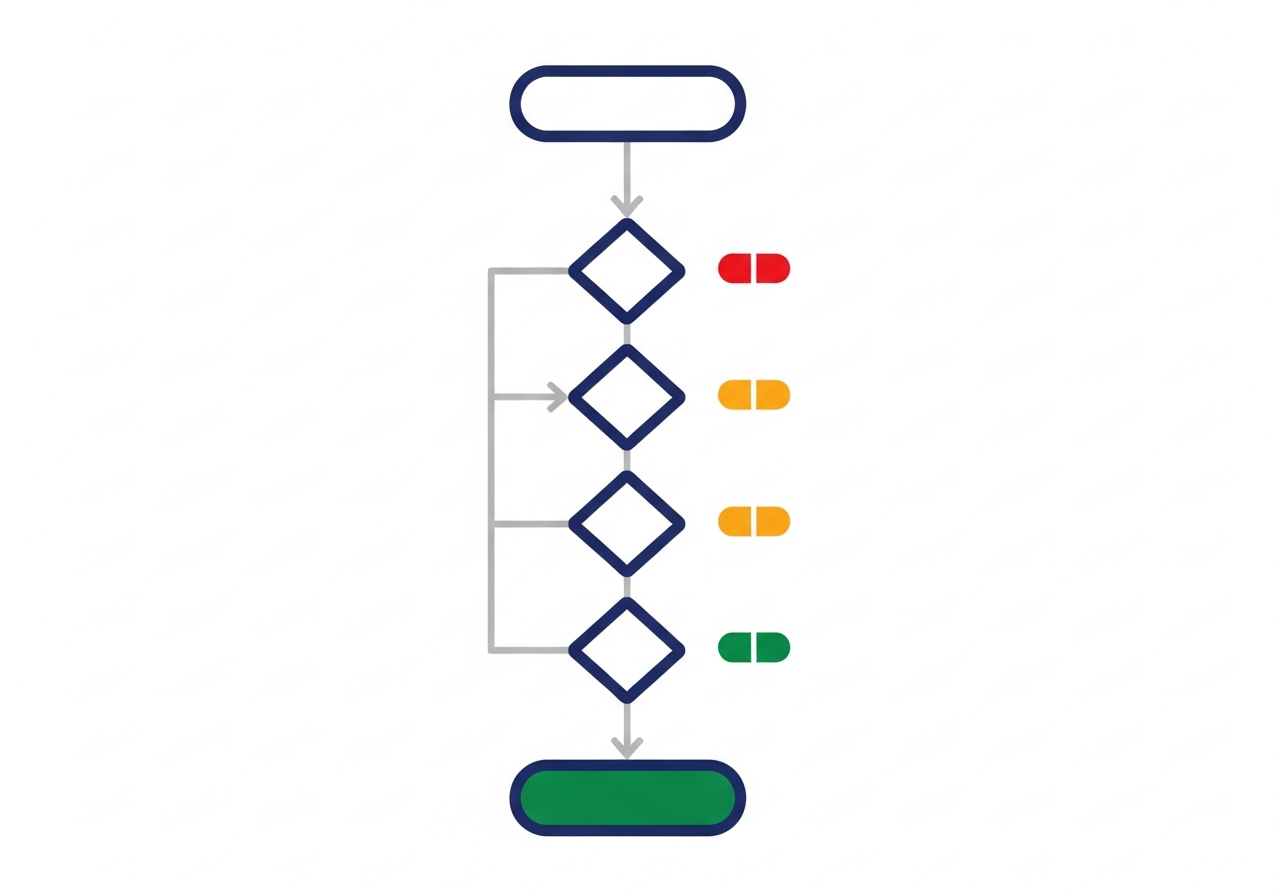
All reports go to the HSE via hse.gov.uk/riddor. There are online forms for each report type, and a telephone service for fatal/major incidents only. The reporting deadlines are:
- Fatalities and specified injuries: report as soon as practicable; written report within 10 days.
- Over-7-day injuries: within 15 days.
- Diseases and dangerous occurrences: as soon as practicable.
Records you must keep
Whether or not you report to the HSE, you must keep a record of:
- The date and method of the report.
- The date, time and place of the event.
- Personal details of those involved.
- A brief description of the event.
Records must be kept for at least 3 years from the date of the incident. You should also keep an internal record of any over-three-day injuries even if they aren't reportable.
The easiest way to do this is to log every incident the moment it happens. Our incident reporting tool captures every required field, attaches photos and witness statements, flags RIDDOR-reportable incidents automatically, and stores the record for the full 3 years. Incidents in your log are also a critical input back into your risk assessment software — every reportable event is a signal that the original assessment may need updating.
Investigation: what happens after the report goes in
Reporting to the HSE is the start, not the end. Most reportable incidents trigger an internal investigation, and serious ones may trigger an HSE follow-up visit or a Fee for Intervention (FFI) charge if a "material breach" of health and safety law is identified. A solid investigation should establish:
- What happened — a sequence of events with times, locations and people.
- Why it happened — immediate cause, underlying cause, root cause. Use the "5 whys" or a fishbone diagram if it helps.
- What you'll change — corrective actions with named owners and deadlines, mapped back to the risk assessment.
- How you'll know it worked — a follow-up date to verify the action has been effective.
Crucially, every corrective action should be tracked through to completion. Open actions sitting on a spreadsheet for months are one of the things HSE inspectors look for, and they suggest a system that isn't really being run.
Linked records to keep alongside the RIDDOR report
- Witness statements taken as soon after the event as possible.
- Photographs of the scene, equipment and any contributing factors.
- The risk assessment in force at the time of the incident, plus any subsequent revision.
- Method statement / safe system of work that should have been followed.
- Training records for everyone involved, showing they had received the relevant training and induction.
- Maintenance and inspection records for any equipment involved.
- Insurance notification — your employers' liability and public liability insurers will want to be told immediately.
Holding all of those in one place is far easier than chasing them around inboxes and filing cabinets after the fact.
Common mistakes UK employers make
- Counting weekends out of the 7-day clock — the 7-day clock includes weekends and rest days.
- Reporting to the police instead of the HSE — the police don't pass it on; you still need to file.
- Failing to report a near miss that meets the dangerous occurrence definition.
- No internal record when a doctor diagnoses HAVS, occupational asthma or dermatitis.
- Reporting late. The 10-day clock can elapse quickly while the injured person is in hospital.
Why getting RIDDOR right matters
Failure to report a RIDDOR-reportable incident is itself an offence. It can also seriously weaken your defence if there's a follow-up investigation, civil claim or insurance dispute. On the other hand, a well-kept incident log is one of the strongest pieces of evidence you can give an inspector that your safety system is working as intended.
How RIDDOR fits with the rest of your safety system
RIDDOR is one piece of a much wider duty. The reportable events it lists are also exactly the ones that should make you go back and challenge your risk assessment, your method statement, your training records and your supervision arrangements. Treated in isolation, RIDDOR is a reporting form. Joined up with the rest of your system, it becomes the single most useful feedback loop you have for closing real safety gaps before they grow.
That's why mature UK businesses tend to bring incidents, corrective actions, training and risk assessments into one platform: each new incident is automatically linked to the assessment it relates to, the training records of those involved, and any open or repeat actions from previous events. It also makes year-end statistics — total reportables, lost-time injury rate, days lost — almost instant to produce for board reports, insurance renewals or pre-qualification questionnaires.
Bring incident reporting into your safety system
Register interest in Assessment First and we’ll confirm current availability for the incident-recording workflow.