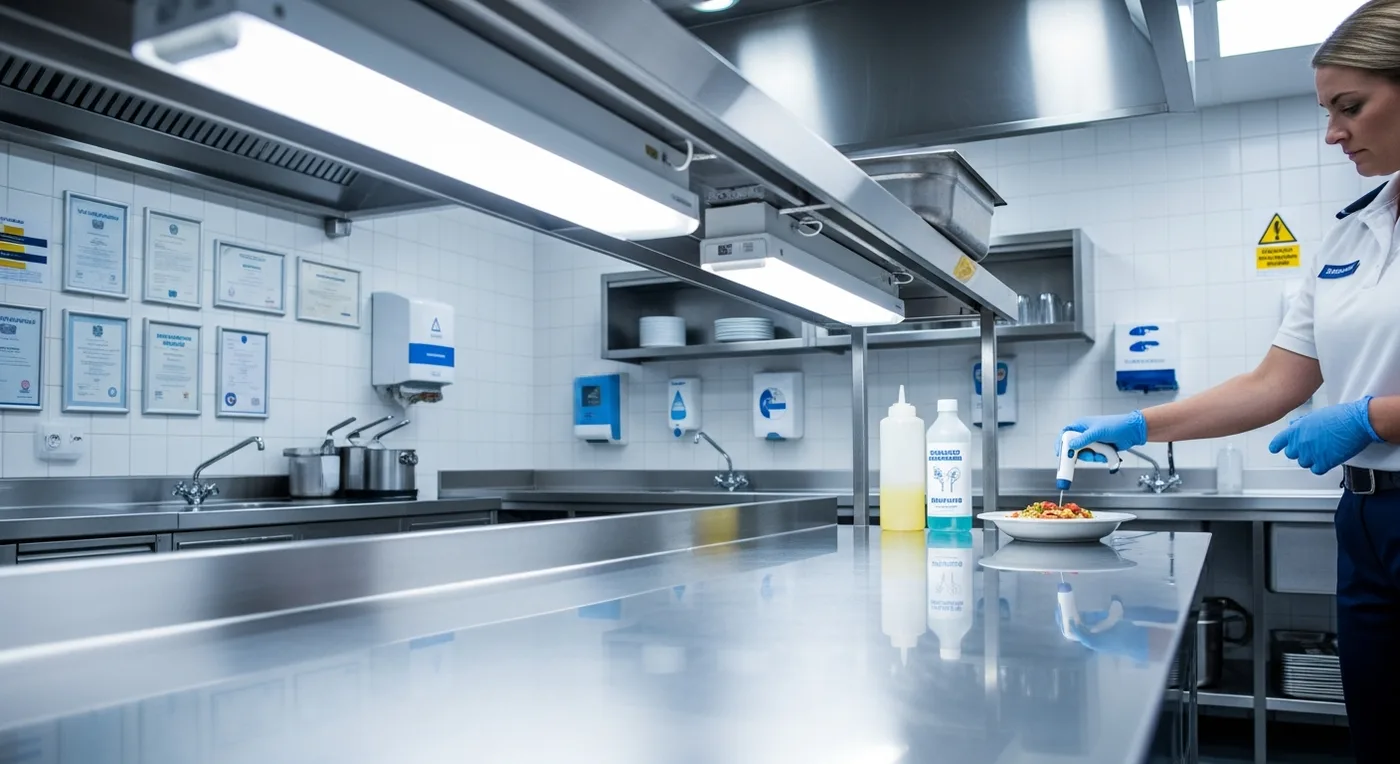
Overview of UK food hygiene law
Food businesses in the UK must comply with the Food Safety Act 1990, the Food Hygiene (England) Regulations 2006, and Regulation (EC) No 852/2004 on food hygiene. From 2021, Natasha's Law also applies to pre-packaged for direct sale food.
Who must register as a food business?
If you regularly sell, cook, store, or distribute food, you are a food business and must register with your local authority at least 28 days before trading. Registration is free and applies to businesses of all sizes.
HACCP — your legal duty
All food businesses must implement procedures based on the Hazard Analysis and Critical Control Points (HACCP) principles. The seven HACCP principles are: (1) conduct a hazard analysis, (2) identify critical control points, (3) establish critical limits, (4) establish monitoring procedures, (5) establish corrective actions, (6) establish verification procedures, and (7) maintain documentation and records.
Allergen requirements
Food businesses must declare 14 major allergens whenever they are present in food: celery, gluten-containing cereals, crustaceans, eggs, fish, lupin, milk, molluscs, mustard, peanuts, sesame, soybeans, sulphur dioxide and sulphites, and tree nuts.
Food hygiene ratings
Local authorities inspect food businesses and award a rating from 0 to 5 under the FSA's Food Hygiene Rating Scheme. In Wales, displaying your rating is a legal requirement. In England it is strongly encouraged.
Record keeping
Keep records of temperature checks, cleaning schedules, staff training, delivery inspections, and any corrective actions. Assessment First's food hygiene module makes maintaining digital records straightforward.